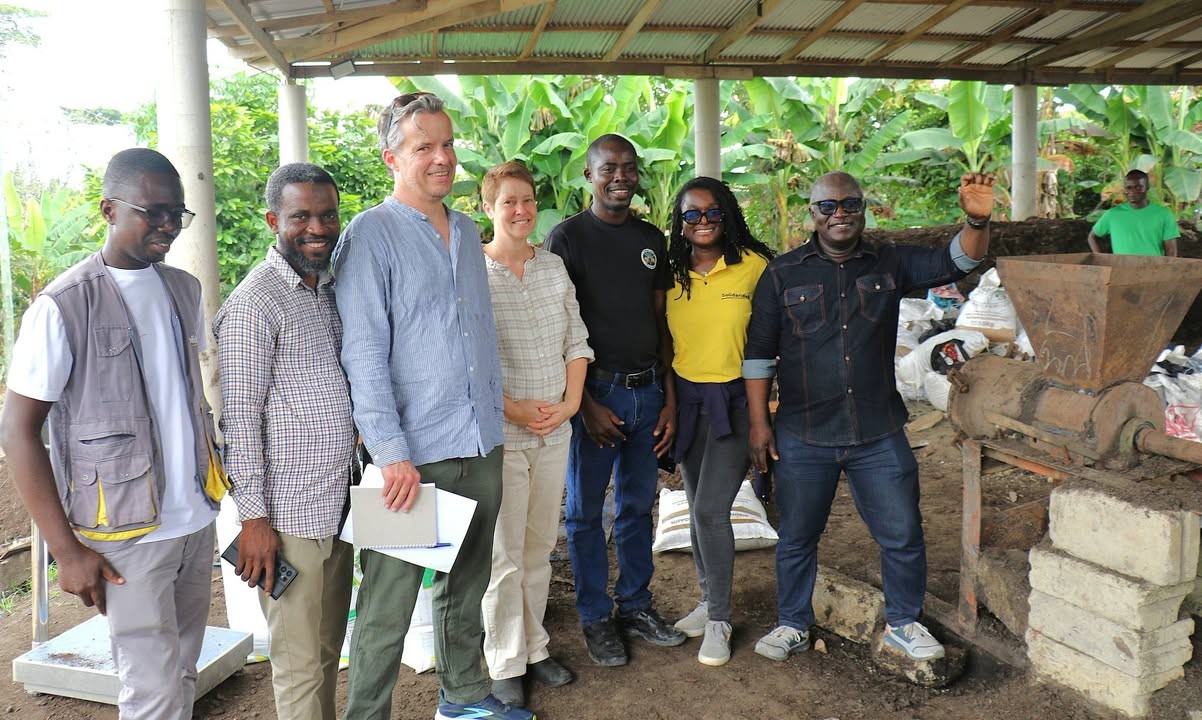
The Sierra Leone Chamber for Agribusiness Development (SLeCAD) participated in a national stakeholder engagement and consultative workshop focused on strengthening the development of a National Cashew Policy for Sierra Leone.
The engagement brought together stakeholders from across the cashew value chain to discuss the opportunities, challenges and policy priorities required to support the sustainable development of Sierra Leone’s cashew sector.
The consultation provided an important platform for stakeholders to share their experiences, identify key constraints affecting the sector and contribute recommendations that can inform the development of a comprehensive policy framework for cashew production, processing, marketing, trade and investment.

Strengthening the Cashew Value Chain
Cashew is an emerging agricultural value chain in Sierra Leone with significant potential to contribute to rural livelihoods, employment, food security, private-sector development and export growth.
However, the sector continues to face a number of challenges, including limited access to improved planting materials and inputs, production constraints, limited value addition and processing capacity, access to finance, market-related challenges, coordination among value-chain actors and gaps in policy and institutional support.
The development of a National Cashew Policy therefore presents an opportunity to establish a clearer and more coordinated framework for addressing these challenges while creating an enabling environment for investment and sustainable growth across the value chain.
Existing national policy work on cashew has similarly identified the need to strengthen production, research, value addition, trade, access to finance and organisation of the sector.
Stakeholder Consultation and Policy Dialogue
The engagement formed part of a broader consultative process aimed at ensuring that the perspectives of stakeholders within the cashew value chain are reflected in the policy development process.
Participants discussed issues affecting different stages of the value chain, from production and farmer organisation to aggregation, processing, marketing, trade and investment.
The consultation also provided an opportunity for stakeholders to consider the policy and institutional measures needed to create stronger linkages between farmers, processors, traders, exporters, financial institutions, government agencies, development partners and other private-sector actors.
For SLeCAD, participation in the process is consistent with the Chamber’s mandate to promote private-sector participation in agriculture and contribute to policy dialogue and advocacy on issues affecting agribusiness development in Sierra Leone.
Supporting Farmers and Agribusinesses
A strong national cashew policy should respond to the practical realities faced by farmers and businesses operating within the value chain.
Among the areas requiring continued attention are access to quality planting materials and agricultural inputs, extension and technical support, access to finance, improved production practices, post-harvest handling, processing and value addition, market access and reliable market information.
Strengthening these areas can help create better opportunities for smallholder farmers while also encouraging investment in processing, aggregation, trading and other businesses connected to the cashew value chain.
The policy process also provides an opportunity to consider the role of women and young people in the sector and how they can benefit from emerging opportunities in production, processing, entrepreneurship and agribusiness services.
Promoting Value Addition and Investment
Beyond increasing production, the development of the cashew sector will require greater attention to processing and value addition.
Strengthening domestic processing can create opportunities for employment, enterprise development and increased value retention within Sierra Leone.
A supportive policy environment can also help address some of the barriers faced by investors and businesses interested in participating in the cashew value chain.
This includes improving coordination among relevant institutions, strengthening market systems, supporting private-sector investment and creating conditions that encourage sustainable and commercially viable cashew enterprises.
The Role of Policy in Sector Development
A national policy provides an opportunity to establish clear priorities and strengthen coordination among the institutions and stakeholders responsible for developing the cashew sector.
The consultation process is therefore important in ensuring that policy priorities are informed by the experiences of farmers, processors, traders, investors, government institutions, development partners and other actors within the value chain.
SLeCAD’s participation also reflects the importance of ensuring that private-sector perspectives are incorporated into agricultural policy development.
As a private-sector-focused agribusiness organisation, SLeCAD remains committed to contributing to policy discussions that can improve the operating environment for agricultural enterprises and support inclusive growth across Sierra Leone’s agricultural value chains.
Looking Ahead
The stakeholder engagement represents an important step in the ongoing process of developing a National Cashew Policy for Sierra Leone.
SLeCAD will continue to support constructive dialogue among stakeholders and contribute private-sector perspectives to discussions aimed at strengthening the cashew value chain.
A well-coordinated policy framework, supported by effective implementation and collaboration among stakeholders, can help unlock greater opportunities for farmers, agribusinesses, processors, investors and other participants in Sierra Leone’s cashew sector.
SLeCAD remains committed to supporting policies and initiatives that promote sustainable agribusiness development, private-sector participation, investment, value addition and improved livelihoods across Sierra Leone.